Commentary author
Publication Type
Commentary
Summary

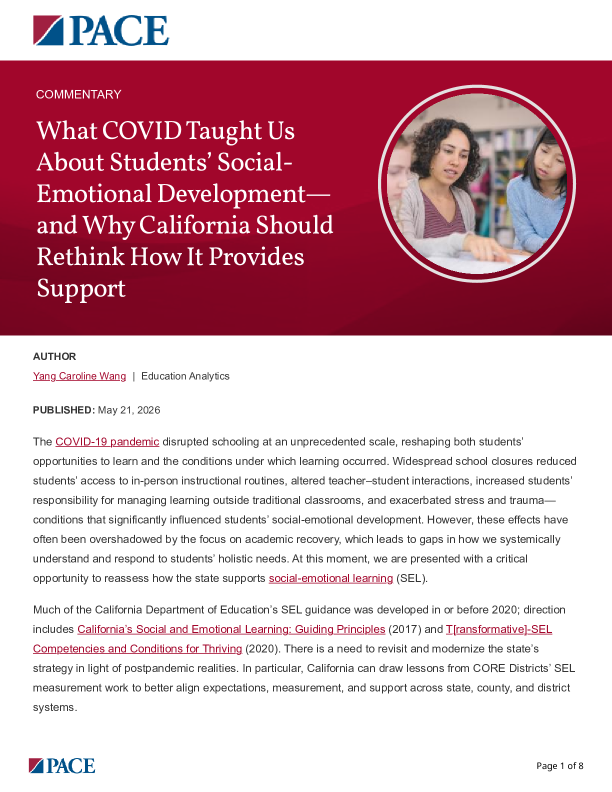
The COVID-19 pandemic disrupted schooling at an unprecedented scale. Widespread school closures reduced students’ access to in-person instructional routines, altered teacher–student interactions, increased students’ responsibility for managing their learning, and exacerbated stress and trauma—conditions that significantly influenced students’ social-emotional development. This commentary offers findings from CORE Districts’ large-scale longitudinal social-emotional learning (SEL) data. Students’ social-emotional competencies followed complicated developmental patterns rather than increasing steadily over time. The pandemic shifted many of those trajectories downward, especially for younger students—and students’ prepandemic competencies predicted the level of academic disruption they experienced. This disruption included changes in attendance, linking California’s high rates (20 percent) of chronic absenteeism—students missing 10 percent or more of the school year—to social-emotional competencies. Author Yang Caroline Wang suggests six considerations for California policymakers, including: prioritize the elementary-to-middle school transition; integrate SEL into core academic strategies; leverage the connection between attendance and SEL; and start longitudinal monitoring.

Statewide Partnership Elevates Youth Voice in Civic Engagement
March 6, 2025 | USC Annenberg Media

K–12 educators worry they won’t be able to defend their most vulnerable students as Trump reforms curriculums, strips classroom protections and moves to dismantle the Department of Education. Annenberg Media interviews with K–12 educators, policy experts and nonprofit leaders across...

Publication Type
Commentary
Summary

California schools face potential disruption and destabilization related to increased immigration enforcement practices, with up to one in eight students, and/or their close family members, at risk of direct impacts. As schools increasingly face the possibility of becoming sites of immigration enforcement, many educators are working to understand how to support students and families who could be—or who already are—affected. This commentary suggests best practices educators can follow before and during any immigration enforcement event that affects a student or their family. The authors also highlight how districts can partner with legal organizations to educate students, staff, and families as well as to help students and families who are in deportation proceedings.