Heather J. Hough

heather_hough
Heather J. Hough
Senior Policy and Research Fellow,
Policy Analysis for California Education, Stanford University

Heather J. Hough is a senior research and policy fellow and former executive director of Policy Analysis for California Education (PACE) at Stanford University. As executive director, she led major statewide initiatives connecting research, policy, and practice. Hough is also an independent consultant and nationally recognized expert in education policy and governance. She works with state and local leaders to strengthen education systems with a focus on strategic planning, policy coherence, system improvement, and collaborative decision making. Her consulting practice helps organizations translate evidence into action by aligning goals, policies, and resources to improve student outcomes and rebuild public trust in education. She is an active volunteer and board member at the local and state levels, where she advances meaningful policy changes that improve people’s lives and strengthen public services delivery. Hough received her PhD in education policy from Stanford University.

updated 2025
Publications by Heather J. Hough
Learning from the CORE Data Collaborative
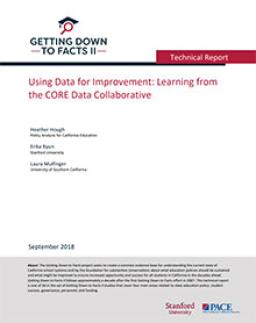
Effective data use is crucial for continuous improvement, but there is confusion about how it differs from data use for other purposes. This report explains what data are most useful for continuous improvement and presents a case study of how the…
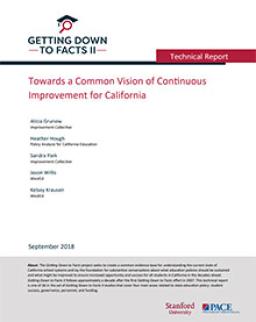
CA is shifting the responsibility for school improvement to local school districts with County Offices of Education playing a supportive role. The focus is on local leaders driving educational improvement and ensuring quality. Strategic data use is…
A Pragmatic Approach to Validity and Reliability
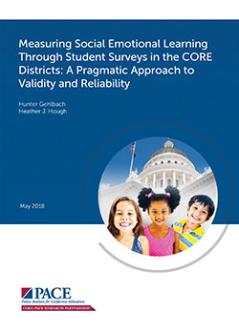
This report discusses the validity and reliability of CORE Districts’ social-emotional learning (SEL) student-report surveys. Through a pragmatic approach, the report answers four guiding questions that explain different facets of validity for…
Evidence from the CORE Districts
This study examines how social-emotional skills develop from Grade 4 to Grade 12 and vary by gender, socioeconomic status, and race/ethnicity. Based on self-report student surveys administered to around 400,000 students in California, the study…