September 2, 2020 | Education Week

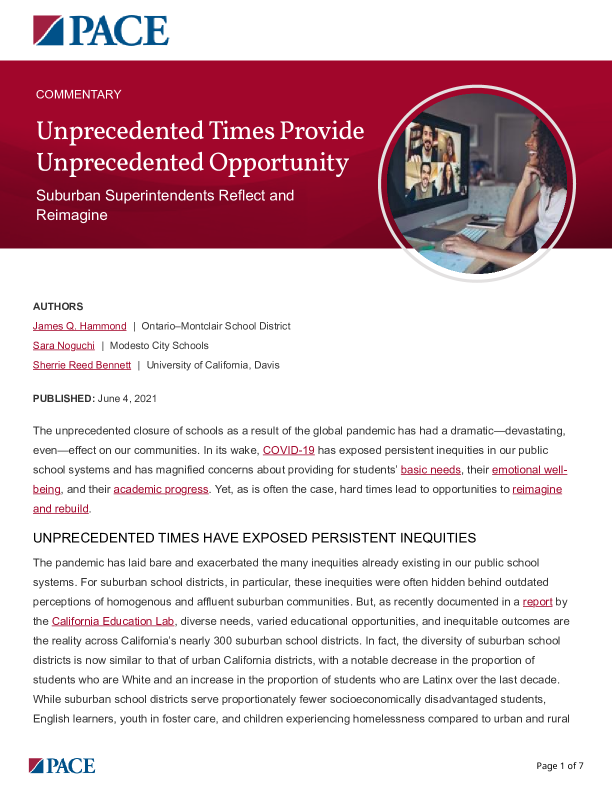
Wanted for the new school year: high-quality remote-learning experiences to engage and benefit all students. In the current pandemic reality, educators can improve learning, we believe, by finding better ways to use and structure students' work time. That's true whether...

July 10, 2020 | Politifact

As thousands of school districts figure out how and to what degree they will reopen this fall, President Donald Trump railed against the recommendations from the Centers for Disease Control and Prevention. The administration has tightly linked reopening schools to...

Summary

In preparing for the next school year, California state policymakers must set clear statewide expectations for teaching, learning, and student support, regardless of whether instruction is online or in person. This spring, local school districts scrambled to adapt to COVID-19 with a wide range of responses largely focused on securing delivery of online resources. Now is the time to shift the conversation back to the core purpose of school: learning. The state should establish a minimum amount of instructional time; create an instrument of diagnostic assessment and require its use; adopt instructional continuity plans; and advocate for and secure additional funding.

Possible Policy Responses
Commentary author
Summary

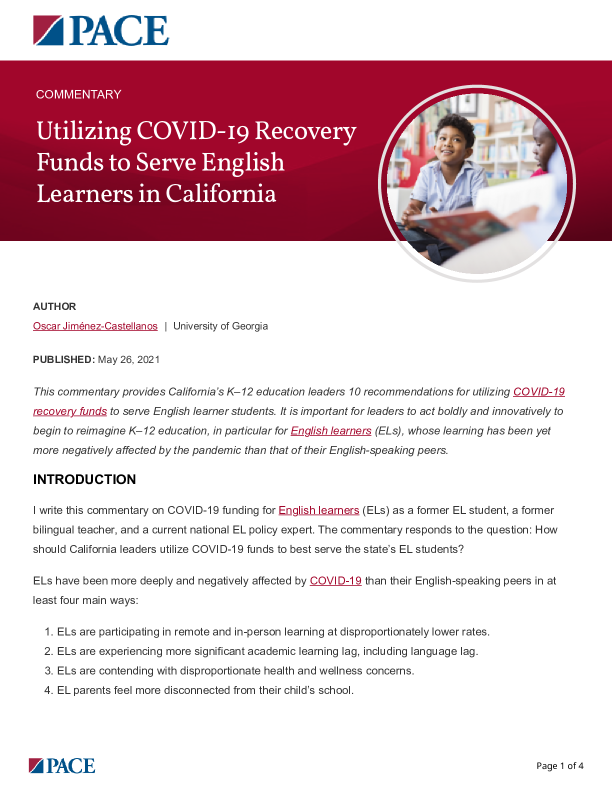
English learners (ELs) face diverse challenges during the pandemic, with varied educational needs and health concerns. The forthcoming academic year will likely amplify the academic gap between EL and non-EL students due to limited access to distance learning. To address this, several policy recommendations are proposed. Universal basic income, health care, and tech access are vital for EL families, especially for those in low-income or undocumented situations. Distance learning must cater to ELs by providing devices, multilingual content, and non-tech learning options. Improved communication with EL families and leveraging their cultural assets are crucial. Extending learning time for ELs, promoting collaboration among teachers, and hiring bilingual family members as aides or tutors are recommended. Assessing returning students' academic status and monitoring funds allocated for ELs' needs are vital. These policy suggestions aim to address EL education challenges amidst the pandemic, stressing equity, resources, and inclusivity in education.

How the State and Districts Can Make Smart Cuts
Commentary author
Summary

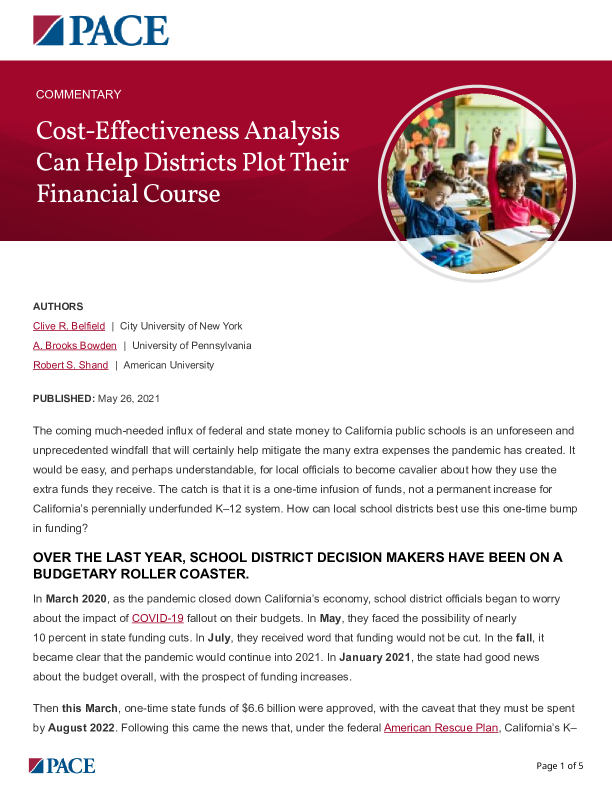
California's schools are facing a staggering $19 billion deficit over two years, a sum that might climb higher as new tax filings arrive. As schools grapple with the complexities of reopening amidst the pandemic, districts find themselves burdened with escalating costs amid dwindling resources. Drawing from lessons learned during the 2008 crisis, a multitude of strategies, while not a singular remedy, could offer relief. However, with 1100 districts and 1200 charter schools, each with distinct challenges, proposed cuts range from 10% to LCFF and potentially exceeding 50% in other programs, excluding special education. The state's reserves, comprising $12 billion, around 17% of the budget, provide some respite, but relying solely on these reserves isn't a viable long-term option. Districts are contemplating various approaches, including staffing reductions, truncated school years, payment deferrals, and federal aid, among other measures, although each poses its own set of challenges. These options, though not a complete solution, can be strategically employed by individual districts with state support to mitigate the impending financial crisis, requiring thoughtful, adaptable solutions as schools aim to revert to pre-crisis financial commitments post-recovery.